FROM THE FAMILY BINDER KIT
In Case I Die Binder: What Goes In It, Page by Page, and Where to Start Tonight
The pages that let your family find things and make the right calls without guessing, in the order to fill them in.
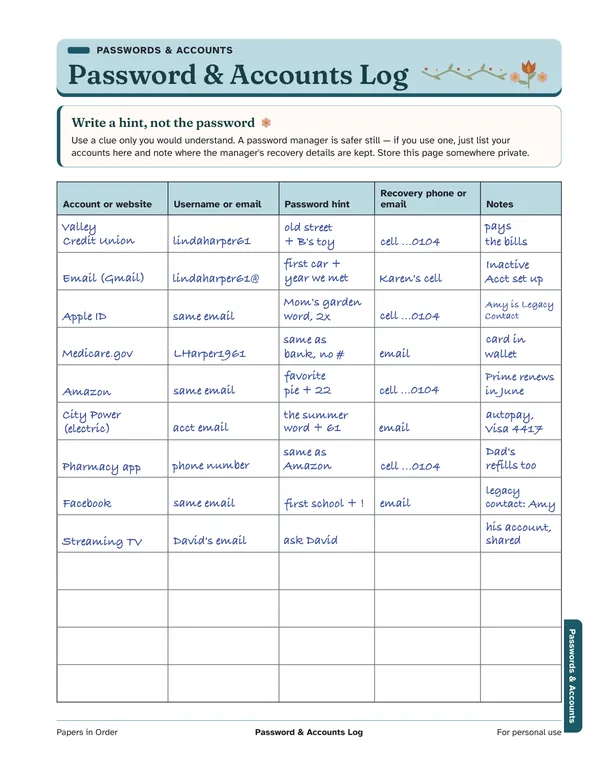
Start tonight, free: the Master Document Inventory, Emergency Contacts and Password & Accounts Log are in our free Home Binder Starter. Get the starter ›
An "in case I die" binder sounds grim. Filling one in usually isn't. Most of it is ordinary information: where the car title is, who your accountant is, which drawer has the spare keys. It is the kind of thing that takes you ten minutes to write down and could take your family weeks to piece together.
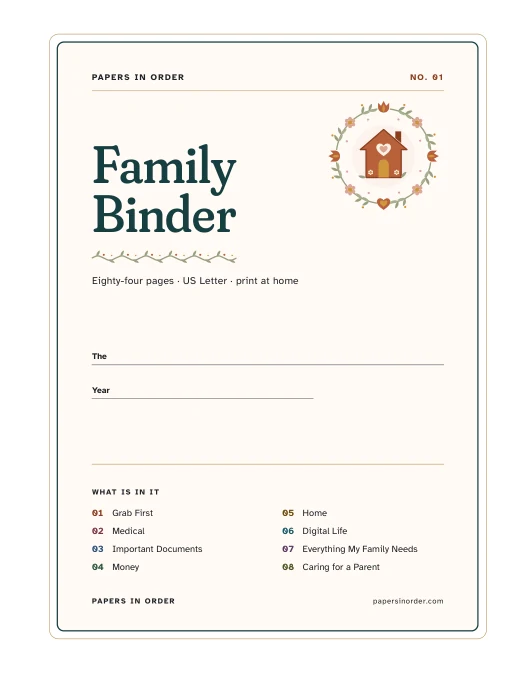
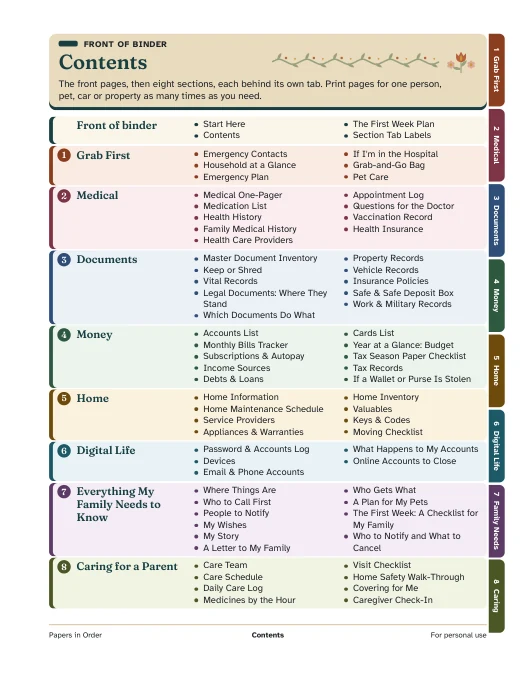
This is what goes in one, page by page, using the pages of the "Everything My Family Needs to Know" section of our Family Binder Kit. You can copy the lists below onto your own paper, or print the pages. Either way, the hardest part is starting, so the free pages to begin with tonight are linked at the top.
Everything my family needs to know
Page 1: Where Things Are
The page says what it is for in one line: The first place anyone should look. It has two columns, What and Where it is, and these rows already printed:
My will and legal papers
Where the signed original is, and who has a copy. An attorney's office counts as a place.
Birth and marriage certificates, Social Security cards and Passports
Usually in one envelope. Write which envelope, in which box.
Insurance policies, Car titles and Deed or lease
Your family will need these in the first weeks, and they are often in three different places.
Tax returns and Checkbook and bank papers
The last three years of returns is a good place to start.
Safe deposit box key and Spare house keys
A key nobody can find is the same as no key.
Jewelry and valuables and Photos and family albums
Where they are, not what they're worth. Valuations go on their own page.
Medicines and medical records, Military discharge papers and Funeral or cemetery papers
Discharge papers matter for veterans' benefits; a cemetery deed is easy to forget you have.
Phone and computer and Pet records
Where the devices live, and who knows how to unlock them. Never the passcode itself.

Everything my family needs to know
Page 2: Who to Call First
Start at the top. Anyone on this list can help make the rest of the calls. The page has two short tables.
Family and close friends, in this order
Five numbered lines. Put the calmest, most organized person first, not necessarily the closest.
People who help with my affairs
One row each for Executor, Attorney, Accountant, Financial advisor, Insurance agent, Employer or HR, Faith leader and Funeral home. A blank row means "we don't have one", and that's useful to know too.

FREE · 10 PRINTABLE PAGES
Get the free Home Binder Starter
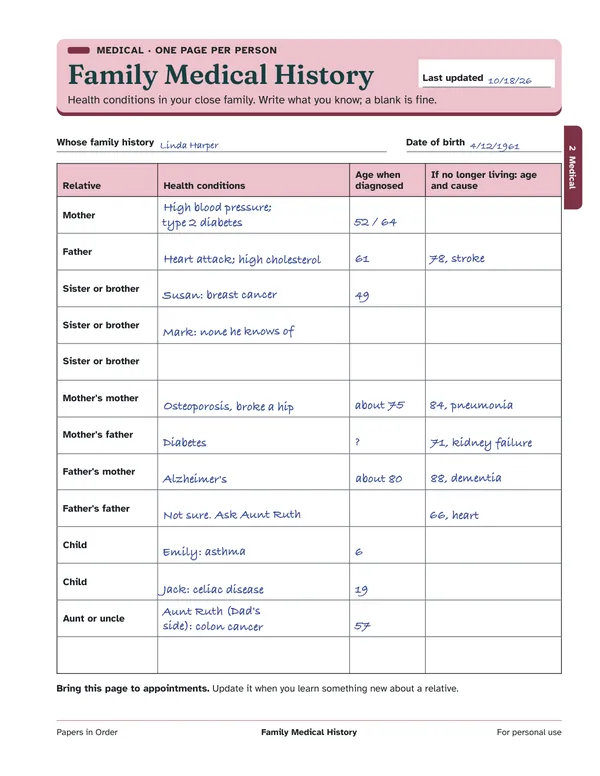
Ten pages to start the binder tonight: Emergency Contacts, Household at a Glance, the Medical One-Pager, a document inventory, a bills tracker, a password log and more. Sent to your inbox.
The rest of the section, in the order to fill it in
- People to Notify. The page asks for Friends, neighbors, clubs, church and anyone else who would want to know. A column says who will tell each one, so nobody makes twenty calls.
- My Wishes. It opens with What I'd like, so no one has to guess. and is honest about its limits: This page is not a legal document. Ask an attorney how to make your wishes official where you live.
- My Story and A Letter to My Family. Optional, and often the pages families keep. A few lines are plenty.
- Who Gets What and A Plan for My Pets. For the things a will doesn't usually list: the quilt, the recipe box, the dog.
- The First Week: A Checklist for My Family. Written for the people you leave the binder to. Its first line is No need to do it all at once, or alone. It lists who to call, which papers they will be asked for, and which agencies to tell, with a column for who is handling each step.
Keeping it calm and useful
- Fill it in a little at a time. One page an evening is a good pace. Nobody needs to finish it in a weekend.
- Write locations, not secrets. "Home safe, folder marked LEGAL" is enough. Passwords, PINs and full account numbers don't belong on paper.
- Tell one person where the binder is. The Where Things Are page says it plainly: Store the binder somewhere safe, and tell one trusted person where it is.
- Date every page. Each page has a Last updated box. A date tells your family how much to trust what they're reading.
- Look at it once a year. Around tax time or a birthday. Most years, nothing changes but the date.
Talking to your family about it
You don't need a big conversation. "I've put our papers in a binder, it's on the closet shelf, and Amy knows" is enough for most families. Some people hand the binder over for an evening so the person they trust can read it and ask questions. Others go through Who to Call First together, because the order of names is the part most likely to surprise someone.
If you are helping a parent with theirs, start with Where Things Are. It is practical, it is not about wishes, and it tends to make the rest of the conversation easier. A parent who has just told you where the car title is will often say what they want for the rest.
What the binder is, and isn't
It is a map: where things are, who to call and what you would like. It is not a will, and it doesn't replace one. If your will, power of attorney or health care directive aren't done yet, the binder is a good way to see what's missing, and an attorney can do the rest. The whole section is twelve pages in the Family Binder Kit, next to the medical, money, home and digital pages your family would also look for.